Errors in Public
Preparation can justify delay. Waiting for certainty, approval, or safety from criticism cannot.
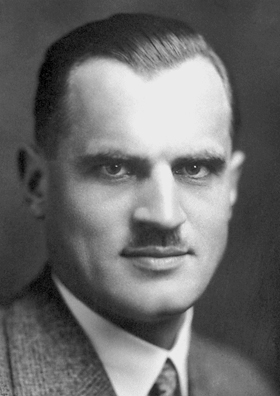
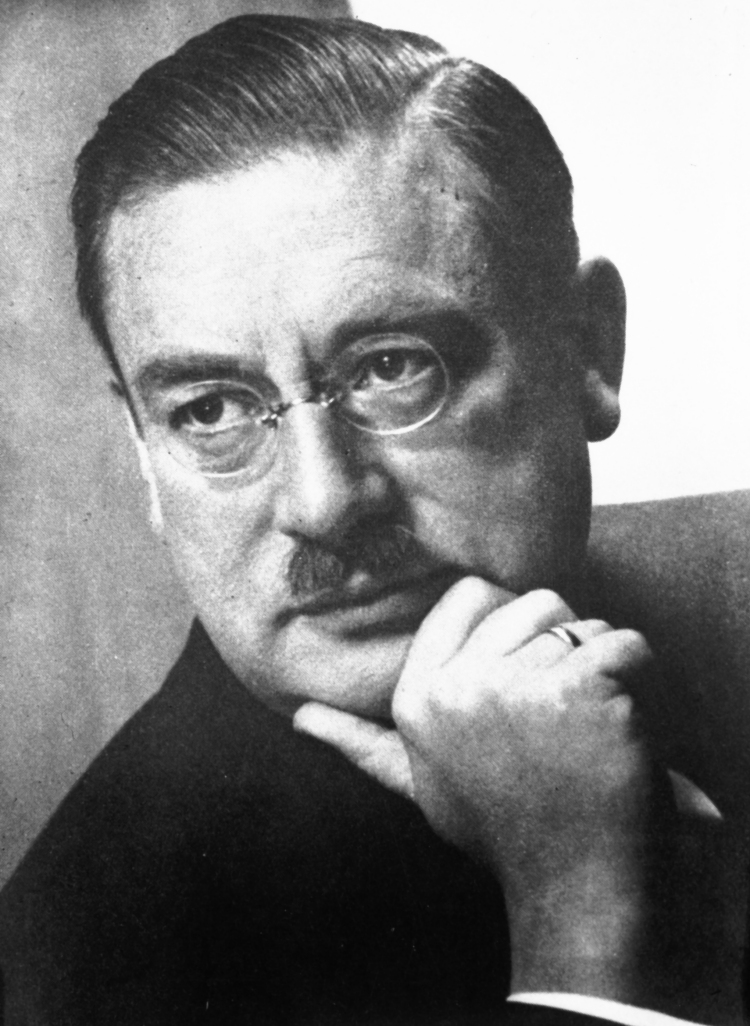
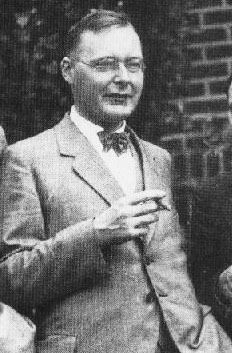
Arthur Compton published the wrong explanation of his X-ray spectra twice. Peter Debye produced a competing theory and tried, unsuccessfully, to interest an experimentalist. Hendrik Kramers may have derived the collision law earlier and then let Niels Bohr talk him out of it. The effect bears Compton’s name.
The conjecture behind this essay is that an idea should be prepared until it can be criticized, then shared. History cannot prove that rule. It can show the difference between an error exposed and an idea withheld.
Compton publishes a large electron
Compton did not start as a partisan of light quanta. In 1919, trying to save the classical wave account of X-ray scattering, he gave the electron an extended structure. An electron comparable in size to an X-ray wavelength could diffract radiation and produce the forward scattering he observed.
The proposed electron was enormous. Compton published it in “The Size and Shape of the Electron.” When he later presented the model at Cambridge, Ernest Rutherford introduced him with a joke telling the audience, in effect, to listen carefully and believe nothing. The model did not survive.
Publication had given the error a definite form. The large electron could be rejected while the unexplained scattering remained.
Two errors in print
Using a Bragg spectrometer in 1921 and 1922, Compton obtained scattered X-ray spectra with more structure than he understood. He first read two tall peaks as one primary line and a smaller peak as the secondary line. That reading suggested a wavelength increase of roughly 35 percent. His classical explanation had an electron absorb the primary radiation and emit it again at a Doppler-shifted frequency.
The calculation fit because the spectrum had been misread.
Later measurements reduced the shift to a few percent. Compton corrected the measurement and supplied a second classical explanation, again based on Doppler radiation. This time he used conservation of momentum, but not conservation of energy, to estimate the recoil electron’s velocity. Another numerical coincidence made the answer look plausible.
In November 1922, after discussions with G. E. M. Jauncey, Compton treated the event as a collision between an X-ray quantum and an electron. The quantum surrendered energy and momentum; the electron recoiled with the difference. Conserving both gave
Δλ = λθ − λ0 = h/(mc)(1 − cos θ).
His 1923 paper reused spectra already in print. The plates did not improve; the explanation did. Publishing early left a record that other physicists—and Compton himself—could attack without discarding the observations.
Debye: a theory without its experiment
After reading Compton’s report of the wavelength shift, Debye worked out a quantum theory of the scattering process. He submitted it on 15 March 1923. It appeared on 15 April, before Compton’s full Physical Review paper in May.
Debye published the theory and asked Paul Scherrer to test it. Scherrer did not. The idea entered the literature, but the experiment that might have made it decisive never happened.
Because Debye’s paper appeared first, some European physicists spoke of the “Debye effect” or the “Debye–Compton effect.” Debye gave priority to Compton, who had produced the spectra and pursued their anomaly through several failed explanations.
Kramers: a result talked out of existence
Hendrik Kramers joined Bohr’s Copenhagen group in 1916. According to a recollection by Kramers’s wife, later reported by Max Dresden, Kramers came home excited in 1921 after working out how a light quantum would collide with an electron. He showed the calculation to Bohr the next day.
Bohr rejected it. He opposed light quanta on physical, philosophical, and historical grounds. In the later account, the argument left Kramers ill; he abandoned the result and destroyed his notes. When Compton published the collision picture, Kramers made no priority claim and joined Bohr in resisting it.
No paper, notes, or contemporary laboratory record survives. The anecdote has the suspiciously satisfying shape of a lost precursor, a dominant elder, and vindication after the fact. It should not be promoted into a documented discovery.
If the calculation existed, however, its private correctness had no scientific force. Nobody else could inspect its assumptions, compare its predictions with the spectra, or rescue it from Kramers’s deference to Bohr.
Bohr’s resistance to event-by-event light quanta is not conjectural. In 1924 he, Kramers, and John C. Slater proposed the BKS theory, which made conservation of energy and momentum statistical rather than exact in each event. Experiments by Walther Bothe and Hans Geiger, followed by Compton and Alfred Simon, contradicted BKS in 1925.
The conjecture
If you have an idea that you think could help solve a real problem, share it in a form others can criticize. Do not let fear or the hope of a better time become indefinite silence.
Compton is the strongest case for it. He was wrong in public, twice, and therefore corrigible. Debye shows that publication without the relevant test can stall. The Kramers story, if true, shows how a private result can disappear without becoming either knowledge or error.
Image credits
- Arthur Compton, 1927 — public domain, Nobel Foundation portrait.
- Peter Debye — Museum Boerhaave; marked freely available for publication.
- Hendrik Kramers, around 1928 — public domain.


